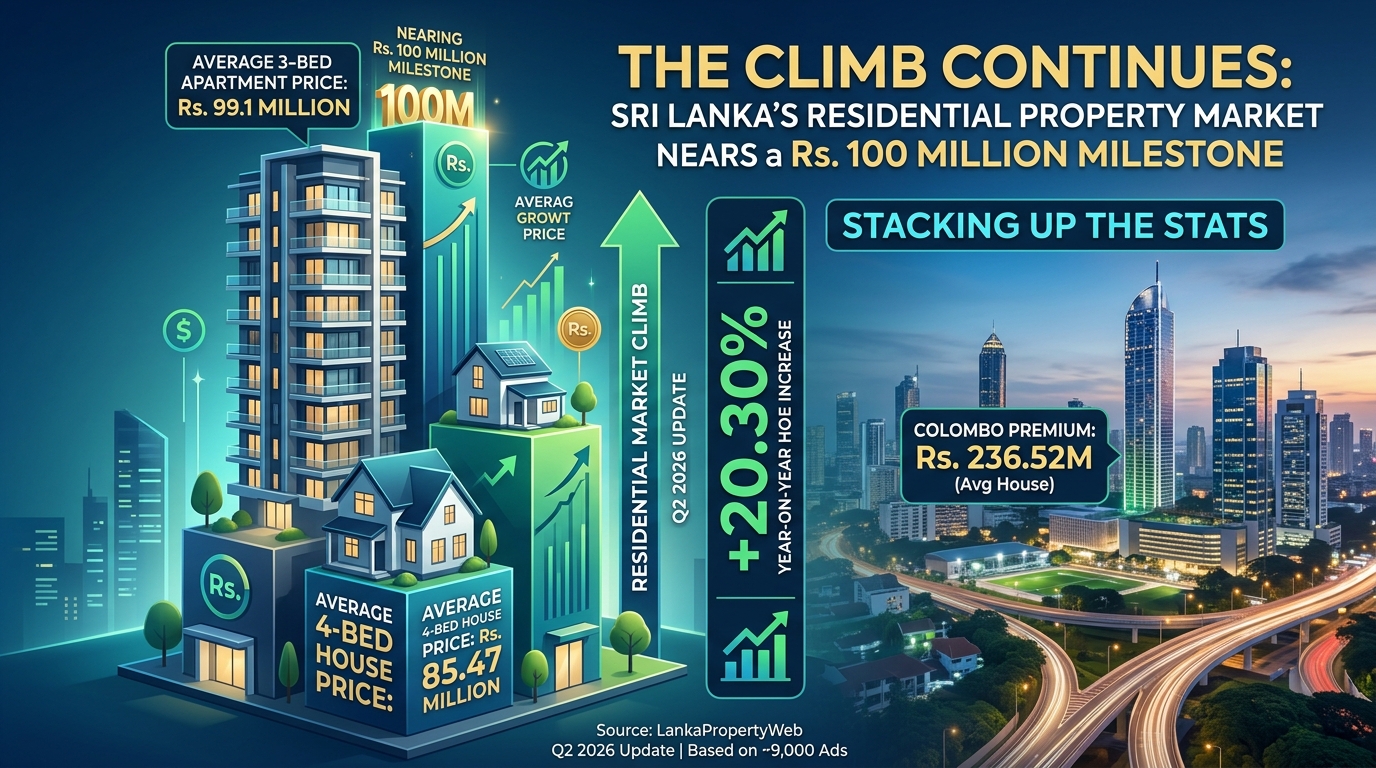
The Climb Continues: Sri Lanka’s Residential Property Market Nears a Rs. 100 million Milestone
Sri Lanka’s residential property market continued its upward trend in Q2 2026, with both house and apartment prices reaching new highs. According to the latest update of the LankaPropertyWeb House Price Index, the average advertised price of a 4-bedroom house reached Rs. 85.47 million. In contrast, the average advertised price of a 3-bedroom apartment increased to Rs. 99.1 million.
This analysis is based on approximately 9,000 Q2 property advertisements published on LankaPropertyWeb up to the end of Q2 2026. The figures represent the asking prices of properties listed by sellers and are not personal opinions, estimates, or final transaction prices. Instead, they provide a reliable indicator of market trends and seller expectations across Sri Lanka’s residential property market.
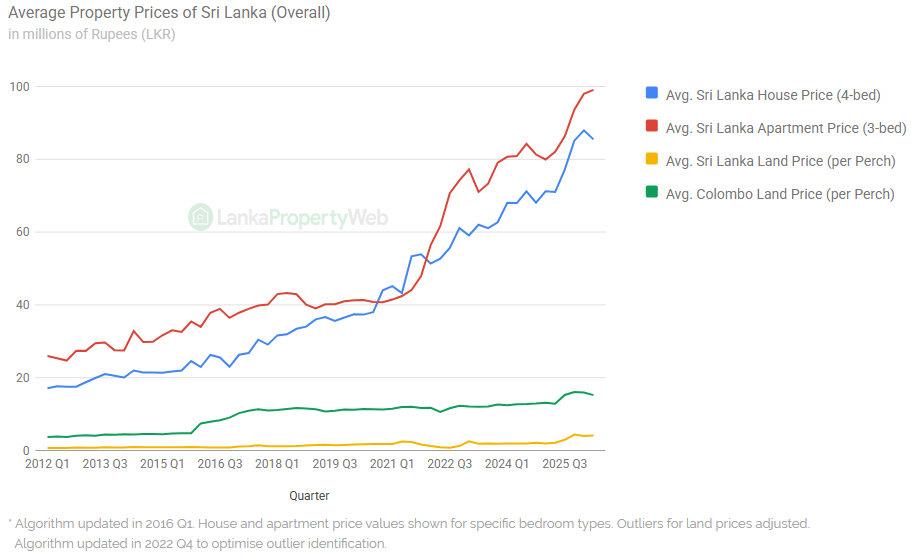
The average house sale price in Sri Lanka increased by 20.30% compared to Q2 2025, reflecting continued demand for residential properties despite changing market conditions. Although the average house price eased slightly from Rs. 88.0 million in Q1 2026 to Rs. 85.47 million in Q2 2026, the overall trend remains strongly positive. Over the past decade, advertised house prices have increased from Rs. 20 million to over Rs. 85 million, driven by higher construction costs, limited housing supply, and sustained buyer demand.
The apartment market has shown even stronger momentum. The average advertised price of a 3-bedroom apartment increased steadily, reaching Rs. 99.1 million in Q2 2026.
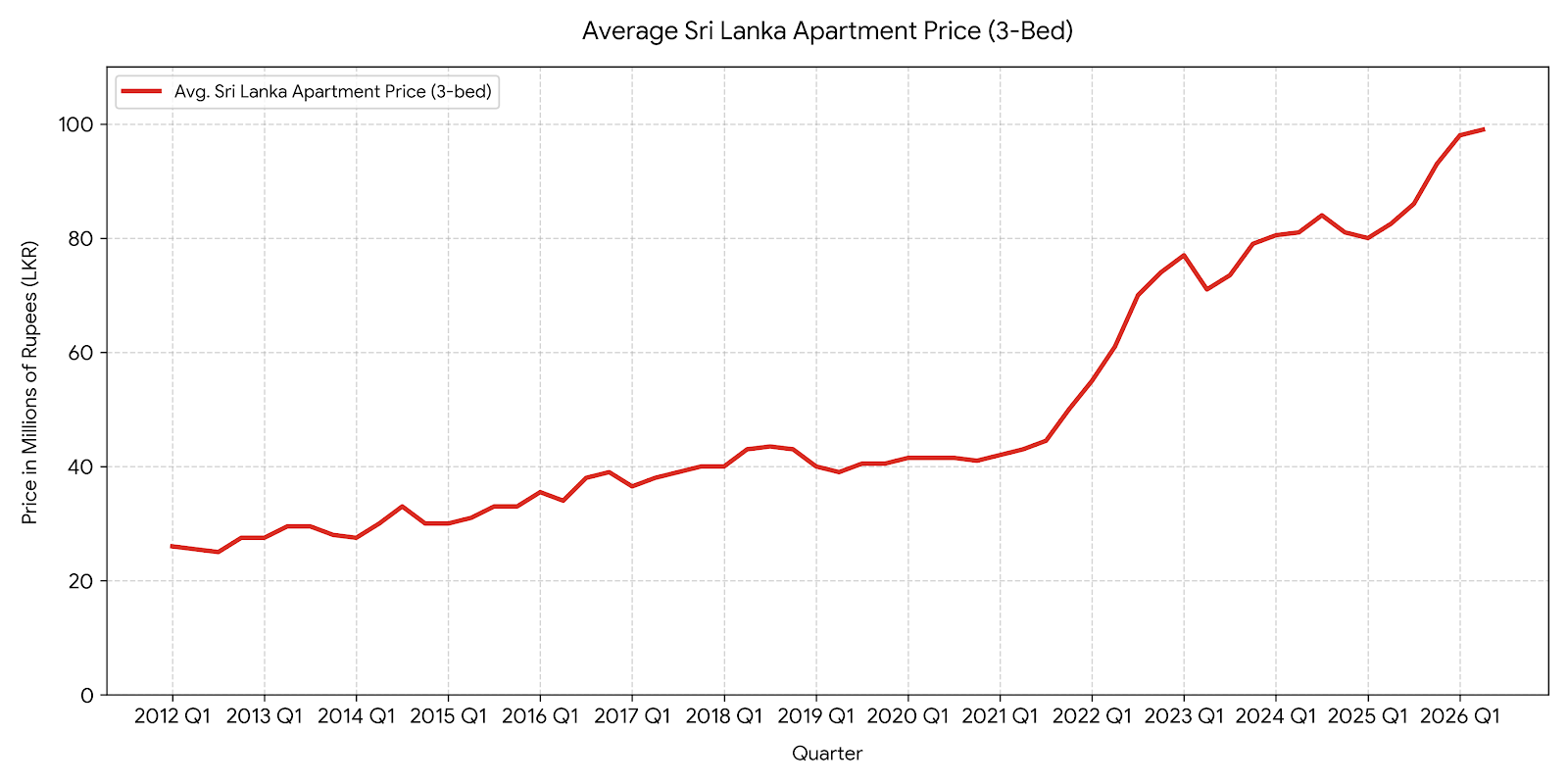
This steady increase of almost 15% within a year highlights continued demand for apartments, particularly in urban locations where land is limited, and vertical living options are increasingly preferred.
Colombo’s residential market also reflects its premium positioning, with strong demand for properties in prime locations and buyers willing to pay a premium for better amenities, accessibility, and lifestyle. The average advertised house price in Colombo reached Rs. 236.52 million, nearly three times higher than the overall average of Rs. 85.47 million. This reflects the city’s limited land supply, concentration of businesses, superior infrastructure, and continued demand for properties in prime locations.
These trends are also significant for land investors. Rising house and apartment prices often signal stronger demand for residential land, as developers seek suitable sites for future projects. As apartment prices continue to approach the Rs. 100-million-mark, development-ready land in well-connected and fast-growing suburbs is likely to become increasingly valuable. Investors who monitor both residential property prices and infrastructure developments can better identify areas with strong long-term growth potential.
Overall, the latest LankaPropertyWeb data indicates that Sri Lanka’s residential property market remains resilient. While short-term price movements may occur, the long-term trend points to continued confidence in real estate. Because these insights are drawn from Sri Lanka’s largest property listing databases, they provide an objective view of market movements and changing seller expectations, helping buyers, investors, developers, and policymakers make more informed decisions.
Posted Date: 18th August 2026